Why Version Control Exists: The Pendrive Problem
Hi, I’m Abdul Samad. A web development learner and tech enthusiast. I write about what I learn, share practical coding tips, and publish in-depth blogs on programming and modern web development.
Check out my full collection of blogs on Hashnode: https://abdulsamad30.hashnode.dev/
Connect with me on X for quick updates and insights: @abdul_sama60108
First let’s connect on X: https://x.com/abdul_sama60108
I post deep-dive tech explanations, real developer insights, and updates on what I’m learning and building.
Why Version Control Exists
Before modern development workflows, managing software projects was very messy. Developers had a hard time tracking changes, working together, and avoiding mistakes in shared code. These problems made software development slower, confusing, and stressful especially as projects grew bigger.
Version control systems (VCS) were created to solve these problems. They help developers keep track of every change, work together safely, and maintain a clear history of a project. But to understand why version control exists, let’s first see how development worked before it.
Problems Faced Before Version Control Systems
Before VCS, developers used simple, manual ways to share and manage code. Common practices included:
Using pendrives, emails, or shared folders to send files to each other.
Naming files in confusing ways like
final,final_v2,latest_finalto keep track of versions.No history of changes—if something went wrong, there was no easy way to go back to a previous working version.
Overwriting each other’s work when multiple developers edited the same files.
These practices caused big problems:
Bugs could stay in the code because changes were not tracked.
Working together at the same time was very difficult.
Developers spent more time managing versions than actually writing code.
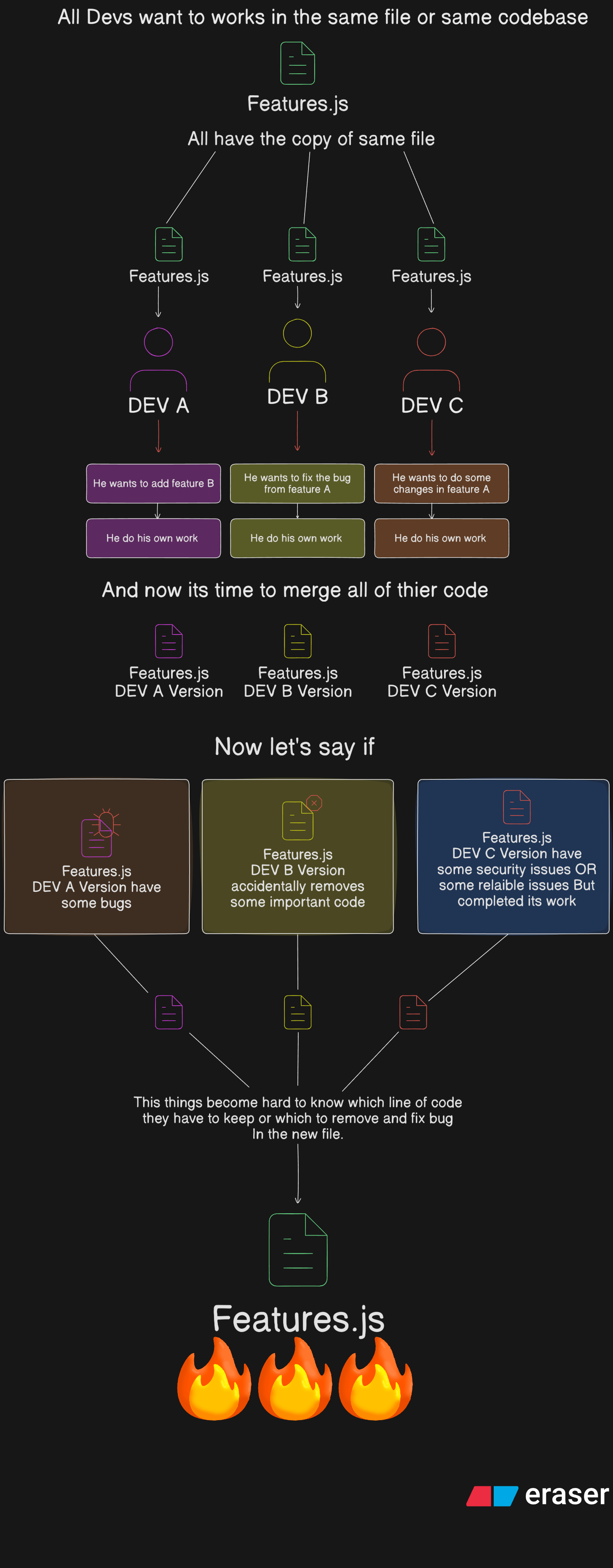
In short, software development was slow, confusing, and frustrating for teams.
The Pendrive Analogy in Software Development
Imagine two developers working on the same project without a version control system:
They store the project on a pendrive to share it.
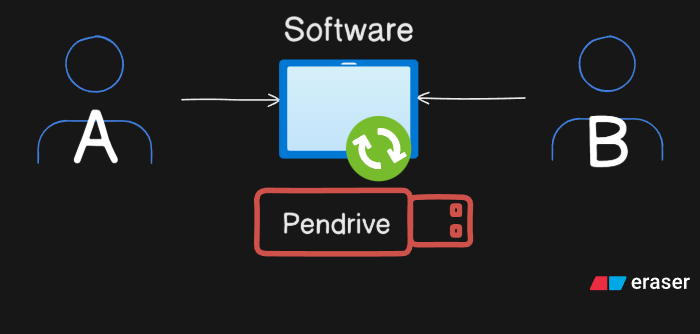
Developer A adds a feature and saves the code as Version 1 on the pendrive.
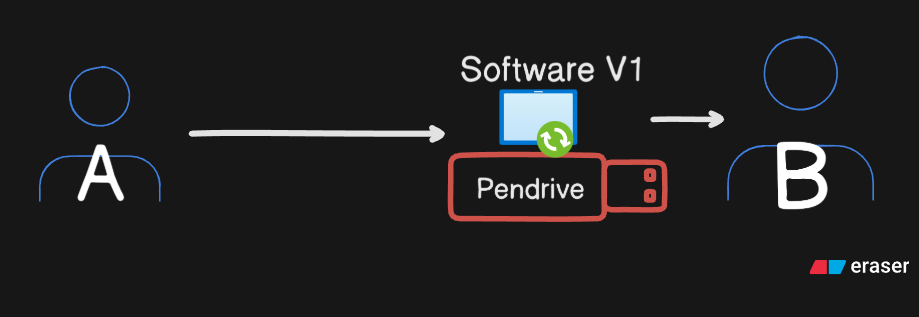
Developer B takes the pendrive and tries to review and change the code but he doesn’t know what was changed, what new features were added, or how the whole project works. He has to read the entire project to understand it.
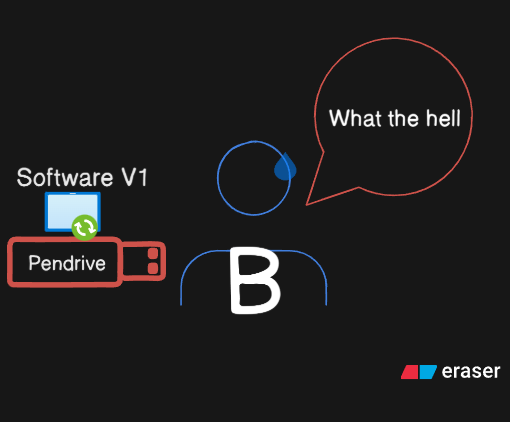
This takes a lot of time and can easily cause mistakes. Any changes Developer B makes could break something that was already working.
Developer B saves his changes as Version 2 and returns the pendrive to Developer A.
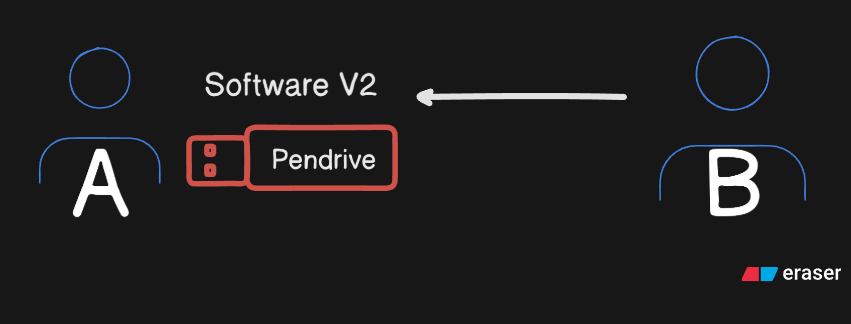
Developer A now has the same problem: no idea what changed, and risk of causing new problems while trying to fix or add features.
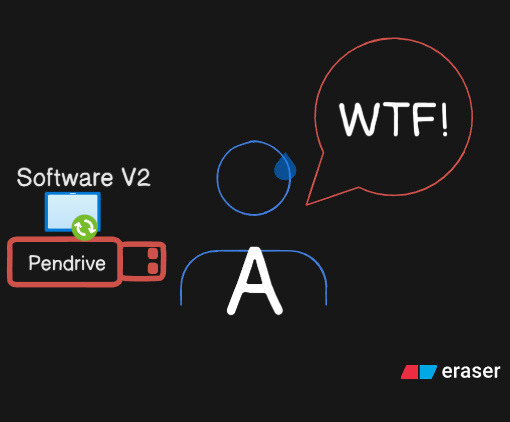
If a bug happens, there is no easy way to go back to the previous working version. The only option is to fix it manually.
Now imagine a team of 10, 50, or even 100 developers working on hundreds of thousands or millions of lines of code. Without a proper system, keeping track of changes and working together becomes almost impossible.
Summary of problems before VCS:
Developers working at the same time could overwrite each other’s changes.
It was impossible to know who made which change.
Bugs from earlier versions could stay unnoticed because there was no history of changes.
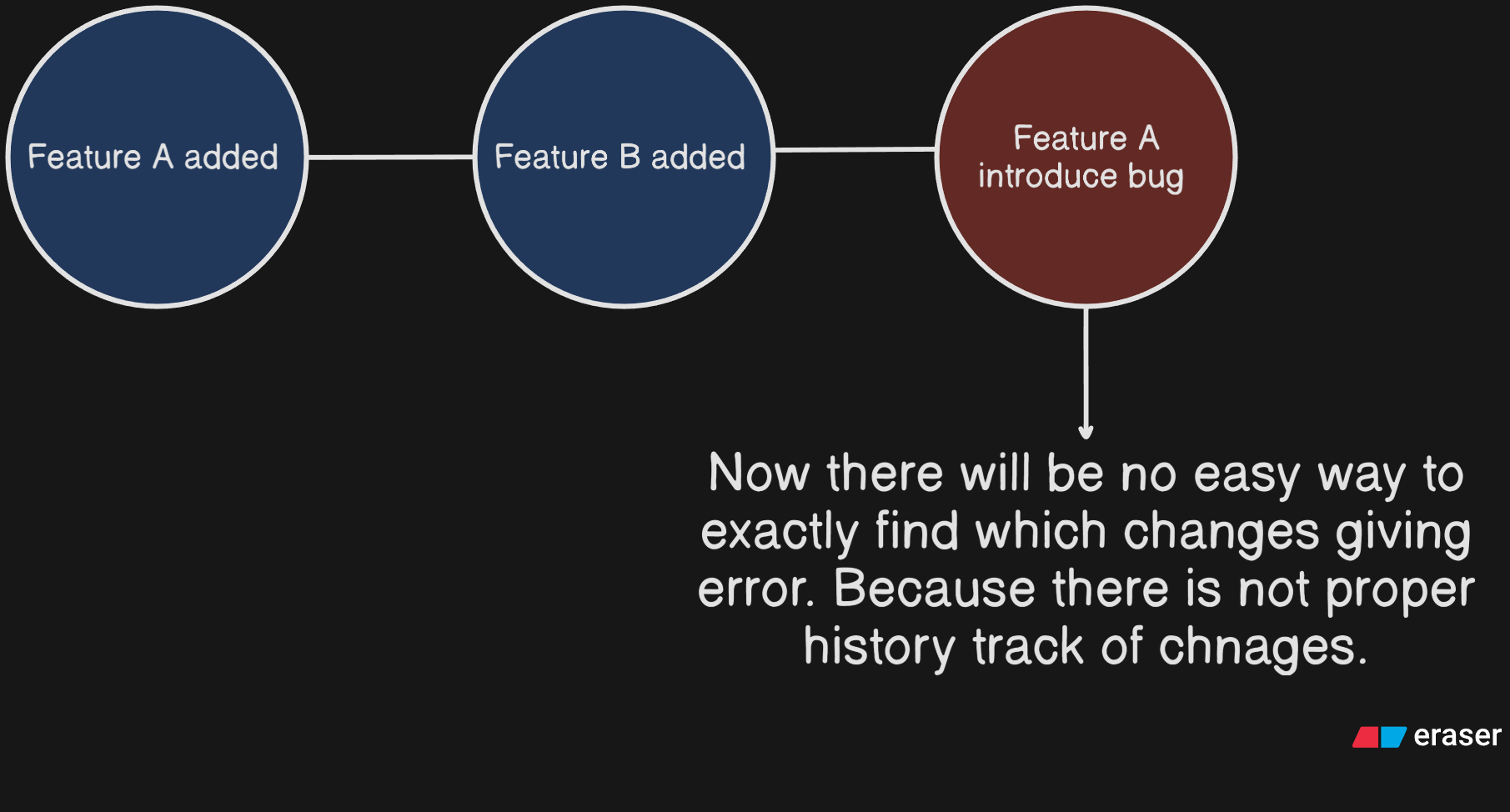
This shows why using pendrives, emails, or shared folders is weak, slow, and not suitable for modern software development.
Why Version Control Became Mandatory
Version control systems like Git solve these problems by providing:
A complete history of changes: Every change is recorded, so developers can see what changed, when, and by whom.
Safe collaboration: Multiple developers can work on the same code at the same time without overwriting each other’s work.
Easy rollback: Teams can go back to previous versions if something breaks.
Better productivity: Developers spend less time managing files manually and more time writing code.
In short, version control is the backbone of modern software development. It organizes work, makes collaboration easy, and helps teams build software without losing control over the code.


